
Mummification in ancient Egypt
Mummification in ancient Egypt was a highly specialized and sacred process designed to preserve the body for the afterlife. Here’s a step-by-step breakdown of how it was typically done:
1. Purification and Washing
- The body was first washed with water, often from the Nile River, to purify it and prepare it for the process.
2. Removal of Internal Organs
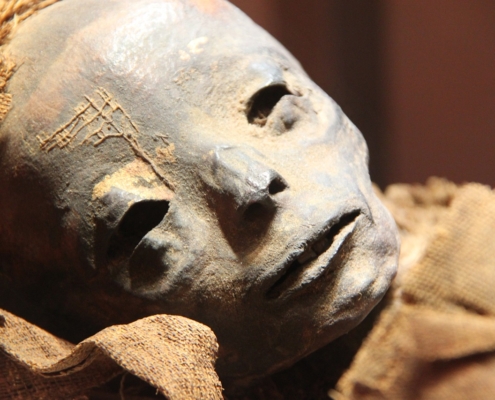
- The internal organs (like the stomach, intestines, lungs, and liver) were removed. The brain was also taken out, usually through the nose, and discarded as it was not considered important.
- The organs were separately preserved. The stomach, intestines, lungs, and liver were often stored in four canopic jars, each with a lid shaped like a different protective deity.
- The heart was typically left inside the body, as it was believed to be the seat of intelligence and emotions and was important for the afterlife.
3. Dehydrating the Body (Natron Treatment)
- The body was dehydrated using natron, a natural salt mixture that helped preserve the body by absorbing moisture. The body was covered with natron and left for around 40 days to dry out completely. This was a critical step in halting decomposition.
4. Anointing with Oils and Resins
- After the body was dried, it was anointed with oils and resins, including myrrh and frankincense, to help preserve the skin and further protect the body. These substances were also thought to have protective and restorative qualities.
5. Wrapping the Body
- The body was carefully wrapped in linen bandages. The embalming process involved wrapping the body in many layers of linen, often up to 20 layers.
- Between the layers of linen, amulets, and charms were placed to protect the body and the soul of the deceased during their journey to the afterlife. Some of these amulets included protective symbols like the ankh (symbol of life) and the scarab (symbol of rebirth).
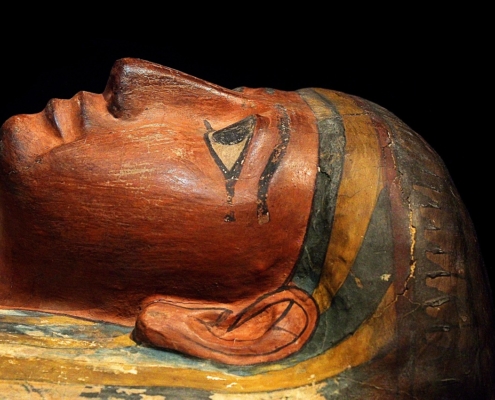
- The final layer of the wrapping often included a mask made of linen or, for wealthier individuals, materials like gold or wood, meant to resemble the person’s face.
6. Final Rites and Burial
- Once the mummification was complete, the body was placed in a coffin. The coffin might be ornately decorated with images and inscriptions to aid the deceased in the afterlife.
- The mummified body was then placed in a tomb, sometimes alongside grave goods (like food, jewelry, and other personal items) to ensure comfort and sustenance in the afterlife.
- Priests would perform final rituals, like the Opening of the Mouth ceremony, which was believed to allow the deceased to eat, speak, and breathe in the afterlife.
The process could vary depending on the person’s status and wealth. Royals and wealthy individuals underwent more elaborate mummification, often with better materials and more intricate ceremonies, while poorer people might have had simpler methods. The goal, however, was always to preserve the body so that the person could live on in the afterlife.