
The Pyramids
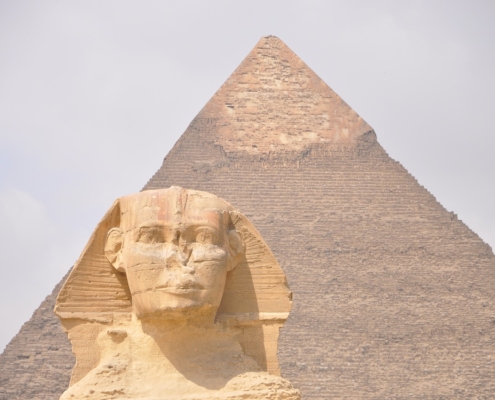 The construction of the ancient Egyptian pyramids, particularly the Great Pyramid of Giza, is still a subject of much fascination and debate. While the exact methods used remain unclear, scholars have developed several theories based on archaeological evidence, ancient texts, and modern engineering knowledge. Here’s a general overview of how the pyramids were likely constructed:
1. Planning and Design
- Site Selection: The location for the pyramids was carefully chosen, often on the west side of the Nile River, which was associated with the afterlife. The site also needed to be close to quarries for the necessary stone.
- Blueprints: Ancient Egyptian engineers would have created detailed plans for the pyramid’s design, including dimensions, orientation, and layout. The pyramids were typically aligned with the stars or the cardinal points, requiring precise astronomical calculations.
- Materials: The main materials for the pyramid construction were limestone (for the bulk of the pyramid), granite (for the inner chambers), and tura limestone (used for the outer casing). The limestone blocks were quarried locally, while granite for the internal chambers came from Aswan, located farther south.
2. Organizing the Workforce
- Contrary to the popular misconception that the pyramids were built by slaves, there is strong evidence that skilled workers, craftsmen, and laborers were employed. These workers were likely well-fed and housed in temporary workers’ villages near the construction site.
- The labor force could have consisted of tens of thousands of workers, including masons, stonecutters, carpenters, engineers, and support staff. It is believed that the workforce was divided into teams, each with specialized tasks.
 3. Quarrying the Stone
- Limestone Blocks: The majority of the pyramid’s mass was made of limestone, which was quarried using copper tools like chisels and saws. Workers would use levers and wooden sledges to extract the blocks.
- Granite Blocks: The harder granite blocks for the inner chambers and the king’s chamber were more challenging to quarry. Workers used copper tools, abrasive sands, and wooden wedges that expanded when wet to split the granite blocks. These granite blocks were transported from Aswan, around 500 miles away.
4. Transportation of Stones
- Rolling and Dragging: To move the massive stones, workers likely used sledges to drag the blocks over logs or along specially prepared roads. Recent discoveries suggest that workers may have lubricated the sand in front of the sledges with water, reducing friction and making transportation easier.
- Rafts and the Nile: For stones like granite, which came from distant quarries, large blocks were transported by raft down the Nile River, especially during the flooding season, when the river was at its highest.
5. Building the Pyramid
- Ramps: The most widely accepted theory for how the Egyptians lifted the massive stone blocks into place involves ramps. Several types of ramps may have been used:
- Straight Ramps: These ramps would run from the ground up one side of the pyramid, with workers dragging stones up using ropes or sledges.
- Spiral Ramps: Some believe the Egyptians built a spiral ramp around the pyramid’s exterior as it grew higher. This would have allowed workers to bring blocks up the sides as the pyramid’s height increased.
- Zigzagging Ramps: Another theory suggests that ramps were built in a zigzagging or switchback pattern, snaking around the pyramid as it rose.
- Precision Placement: Once the stones were moved into place, workers used levers, wooden sledges, and ramps to position them accurately. The blocks were finely cut to fit together seamlessly, with minimal gaps between them.
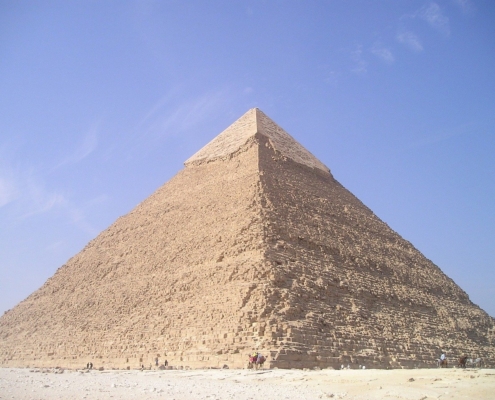 6. Finishing Touches
- Casing Stones: The outer surface of the pyramid was originally covered with smooth, highly polished limestone casing stones. These were designed to reflect the sunlight and make the pyramid shine brightly. Over time, many of the casing stones were removed for other building projects.
- Interior Chambers: The internal chambers, like the King’s Chamber in the Great Pyramid, were constructed with precise measurements and carefully laid granite blocks. The layout of these chambers was essential for both the pharaoh’s burial and the security of his tomb.
7. Completion and Aftermath
- Once the pyramid was finished, the workers celebrated with rituals and offerings to honor the gods and the pharaoh’s successful transition to the afterlife.
- The pyramid’s construction likely took several decades to complete, with the workforce rotating over time.
Theories and Challenges:
- Despite these theories, the exact methods of construction remain a mystery. The lack of direct records from the time of construction and the absence of detailed accounts about the work itself make it difficult to know exactly how the Egyptians achieved such architectural feats.
- Researchers continue to explore the possibility of other advanced techniques, such as the use of counterweights, cranes, or even a combination of different types of ramps.
The construction of the pyramids was an extraordinary achievement, showcasing ancient Egypt’s advanced engineering, organization, and dedication to religious and cultural values. The precision with which they were built, considering the technology available at the time, continues to impress scholars and engineers alike.